Cultivating Community & Ecosystem Resilience Through Herbal Medicine

Cultivating Community & Ecosystem Resilience Through Herbal Medicine

Rethinking Our Relationship
With Wildfires

In the past decade, our understanding of wildfires and their role in the ecosystem has dramatically changed. This shift in perception sheds light on numerous misconceptions that have often guided policy and public sentiment. Several key points emerge from the latest scientific research:

  • The best way to protect homes from wildfires is by making them less combustible and maintaining a 100-feet defensible space.
  • High-intensity fire patches are biodiversity hubs, supporting numerous unique species.
  • Contemporary fires are primarily of low to moderate intensity.
  • Contrary to belief, there’s a deficit of fire in today’s forest ecosystems compared to historical times.
  • Dead trees, or “snags,” play an even more critical ecological role than live trees.
  • High-intensity fires emit fewer particulates and are cleaner than low-intensity ones.
  • Current forests act as carbon sinks, absorbing more CO2 than they emit. Fire plays a vital role in maintaining this balance.
  • Mechanical “thinning” reduces the overall carbon storage of forests.

As we delve deeper into the intricate workings of forest ecosystems, it’s becoming evident that wildfires aren’t the malevolent forces we once deemed them to be. They’ve been an integral part of these landscapes for millennia, shaping the flora and fauna that we see today. Rather than waging a war against them, our energies might be better spent on understanding their rhythm and role.

The challenge for modern society lies not in suppressing every wildland fire but in discerning when to let nature take its course and when to intervene. Acknowledging the historical and ecological significance of wildfires can guide us toward a more harmonious coexistence, where we respect the flames not as adversaries but as custodians of forest health and balance. 

The Natural Role of Stand-Transforming Fires

“Stand-transforming fires,” a term often used interchangeably with high-intensity fires, are those that result in substantial changes to the forest stand’s composition and structure. In many ecosystems, including the coniferous forests of the western U.S., these fires are not anomalies but a part of the natural cycle. They serve several critical ecological functions:

  • Resetting Successional Stages: Just as a garden needs tilling, forests benefit from periodic resets. High-intensity fires clear out dominant trees and undergrowth, paving the way for pioneer species, which are the first to colonize disturbed areas. Over time, these give way to other plants and trees in a successional sequence until the forest matures again.
  • Biodiversity Boost: Post-fire landscapes, contrary to the barren image they invoke, are often teeming with life. The mix of sunlit clearings and patches of surviving vegetation creates a mosaic that can support a broader range of species than a uniform forest.
  • Soil Enrichment: The intense heat of these fires can release nutrients locked in the vegetation and forest floor. Once these nutrients are returned to the soil, they become readily available for the next generation of plants.

The Unintended Consequences of Fire Suppression

Beginning in the early 20th century, the U.S. adopted aggressive fire suppression policies, driven by the desire to protect human communities and valuable timber resources. These policies have led to some unintended ecological consequences:

  1. Fuel Accumulation: By suppressing the natural fires that would typically clear out underbrush and deadwood, we’ve allowed many forests to accumulate dense layers of potential fuel. This makes them more susceptible to even more intense fires when they eventually do occur.

  2. Altered Ecosystems: The lack of periodic high-intensity fires has allowed some forests to become unnaturally dense and homogeneous. This not only reduces biodiversity but can also make these areas more vulnerable to pests and diseases.

  3. Historical Context: Studies using tree rings, charcoal deposits, and other methods have shown that before the onset of aggressive fire suppression, high-intensity fires occurred at intervals that were much more frequent than what we observe today. This historical context underscores how our modern perspective on wildfires may be skewed.

In sum, while it’s essential to protect human lives and property from the immediate threats of wildfires, it’s equally crucial to understand and respect the historical and ecological role of high-intensity fires. Only with this balanced perspective can we hope to manage our forests in a way that honors both human needs and the intricate web of life that these forests support.

The Vital Role of Dead Trees

Often overlooked and underestimated in terms of their ecological contribution, large dead trees, commonly referred to as “snags,” stand as silent sentinels with a unique role in the forest ecosystem. Their importance cannot be overstated:

  • Biodiversity Beacon: Snags provide critical habitats for countless species. Birds such as woodpeckers excavate cavities in these trunks, which later serve as nesting sites for other bird species and small mammals. Insects thrive within the decaying wood, drawing in predators like birds and bats.
  • Nutrient Cycling: As snags decompose, they slowly release vital nutrients back into the soil, enriching it for future generations of plants.
  • Historical Impact: Fire suppression policies, coupled with extensive logging activities, have led to a significant decline in the number of these crucial ecological structures. This reduction not only disrupts the habitats of species dependent on them but also affects the natural nutrient balance in the forest.

Redefining "Catastrophic" Wildfires

When we hear about wildfires, there’s often an air of doom. However, not all fires are alike. While most of the fires today exhibit low to moderate intensity:

  • High-Intensity Patches: These rare pockets, while initially appearing devastating, are in fact nature’s way of rejuvenating itself. These patches act as biodiversity hubs, providing habitats and resources for a myriad of native plants and wildlife.
  • Ecosystem Revitalization: Far from being wastelands, these so-called “catastrophic” areas are vibrant and dynamic, showcasing nature’s resilience and adaptability.

Protecting Homes, Not Misdirecting Resources

The real tragedy in wildfires is the destruction of homes. However, the solution lies not in destructive logging or fuels reduction in distant forest areas. Instead, it’s in ensuring homes in forested areas are made less combustible, using fire-resistant materials, and creating defensible spaces.
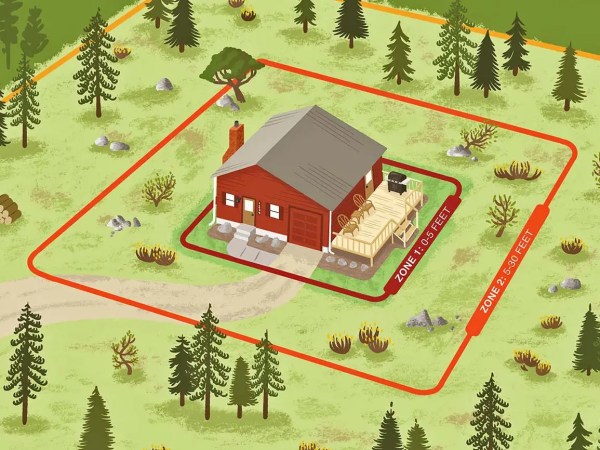
  • Fire-Proofing Homes: The frontline defense against wildfires isn’t in distant forests but at the very thresholds of homes in forested regions. Incorporating fire-resistant materials in construction, installing ember guards, and using fire-resistant landscaping are pivotal.
  • Defensible Spaces: Maintaining clear spaces around homes, devoid of flammable materials and dense vegetation, can act as a barrier, preventing fires from coming too close. It’s crucial that resources are channeled wisely, emphasizing direct protection over misguided and ecologically harmful interventions.
Home Ignition Zone Overview

The Real Definition of Forest Health

A genuinely healthy forest is not just one filled with towering trees and dense green canopies. It’s an ecosystem that showcases a spectrum of fire effects and is punctuated with the presence of dead trees and logs. Here’s why:

  • Diverse Fire Intensities: A forest’s health isn’t dictated by preventing fires, but by allowing a natural balance of their intensities. Low, moderate, and high-intensity fires each offer unique benefits. Low-intensity fires tend to clear out underbrush, recycling nutrients back into the soil and allowing for new plant growth. Moderate-intensity fires can target thicker vegetation, creating space for new tree saplings and pioneering species. High-intensity fires, although occasionally seen as destructive, play a vital role in resetting the ecological clock of an area, paving the way for entirely new ecosystems to establish themselves.
  • Value of Dead Trees (Snags): Large snags, or standing dead trees, offer invaluable resources within the forest. They provide habitats for numerous wildlife species, from woodpeckers that feed on the insects living in the bark, to mammals that use cavities for nesting. As these snags break down, they return essential nutrients to the soil, promoting a fertile environment for new growth.
  • Logs on the Forest Floor: Fallen trees or logs act as natural reservoirs. They store moisture, serving as a source of water for plants and animals, especially during dry periods. Over time, as logs decay, they become habitats for fungi, insects, and smaller plants, contributing to the forest’s biodiversity.

Thinning projects, while often initiated with the best intentions, can inadvertently disrupt this natural balance. By preventing high-intensity fires and reducing the number of large snags, we might be depriving the forest of the very mechanisms it relies on for regeneration and health. It’s akin to removing a vital link from the ecological chain, potentially leading to unforeseen consequences in the long run.

Share this:

Like this:

Like Loading…

Discover more from Ecozoica

Subscribe now to keep reading and get access to the full archive.

Continue reading